It’s a trap: Leads ≠ paying customers.
You might be reporting on clicks, impressions, CTR and form fills.
But when it comes to qualified leads, opportunities, and closed deals… Do the numbers really add up?
I’ve spent years auditing and optimising paid social campaigns, and one truth has been consistent: activity is not performance.
If your lead generation strategy can’t connect to revenue, something is missing. It’s time for a different approach.
Sure, a few optimisations can temporarily make the numbers jump, but a healthy business needs a long-lasting system, not just a quick hit.
That was exactly the case at The Film Scoring Academy of Europe (FSAE). Their high-spend, high-volume approach produced thousands of low-quality leads and little visibility of real outcomes — leaving the admissions team buried in noise instead of speaking with qualified students. We rebuilt the foundation, turning paid social into a performance-driving ecosystem that revealed truth, not just activity.
Building a Full Funnel Story, Not a Single Campaign
The old strategy was stuck in one gear: sell now. And that’s where so many teams go wrong. If you only run “bottom of funnel” ads, you’re basically shouting at people who don’t even know you exist. It’s inefficient and expensive.
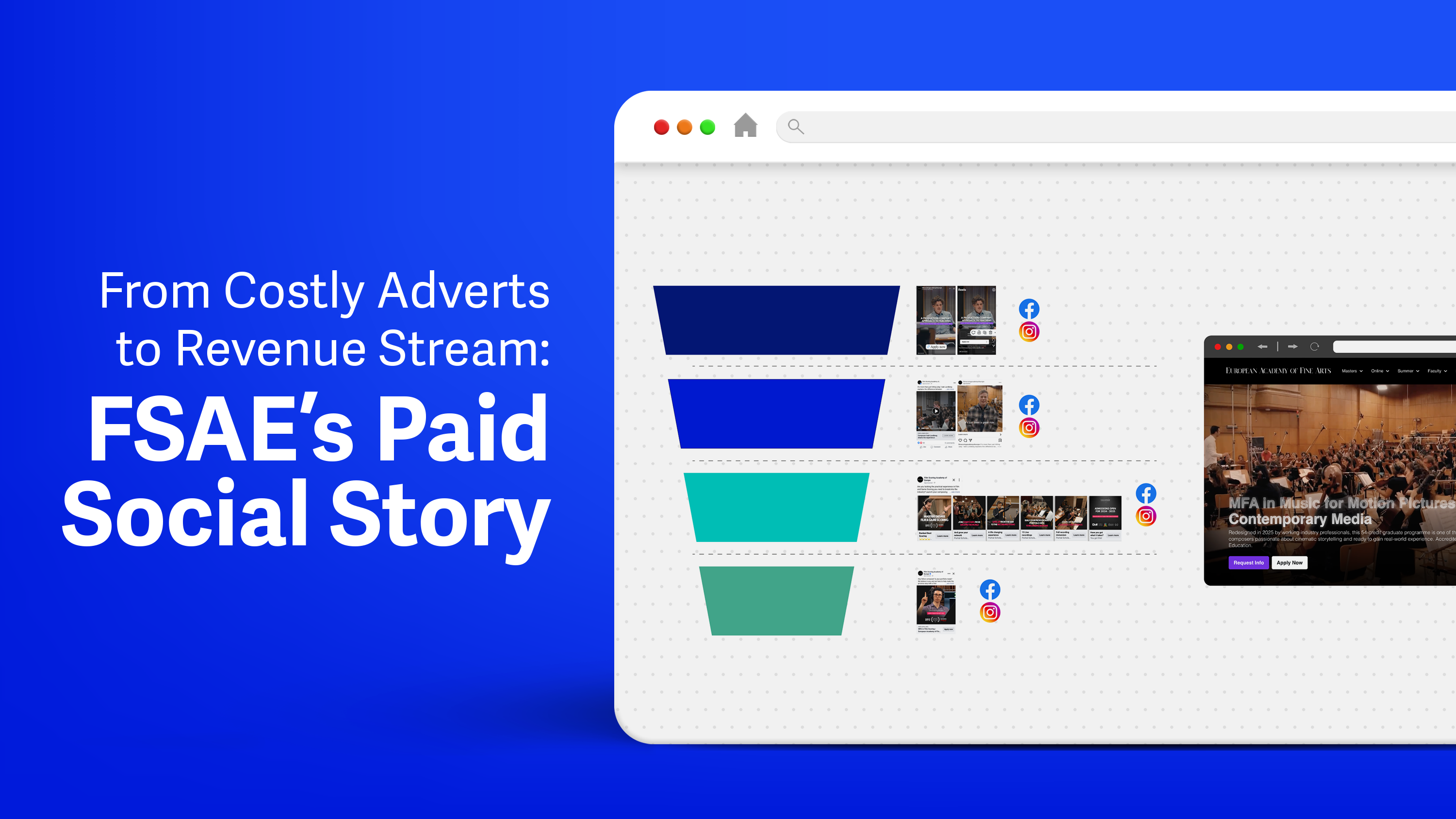
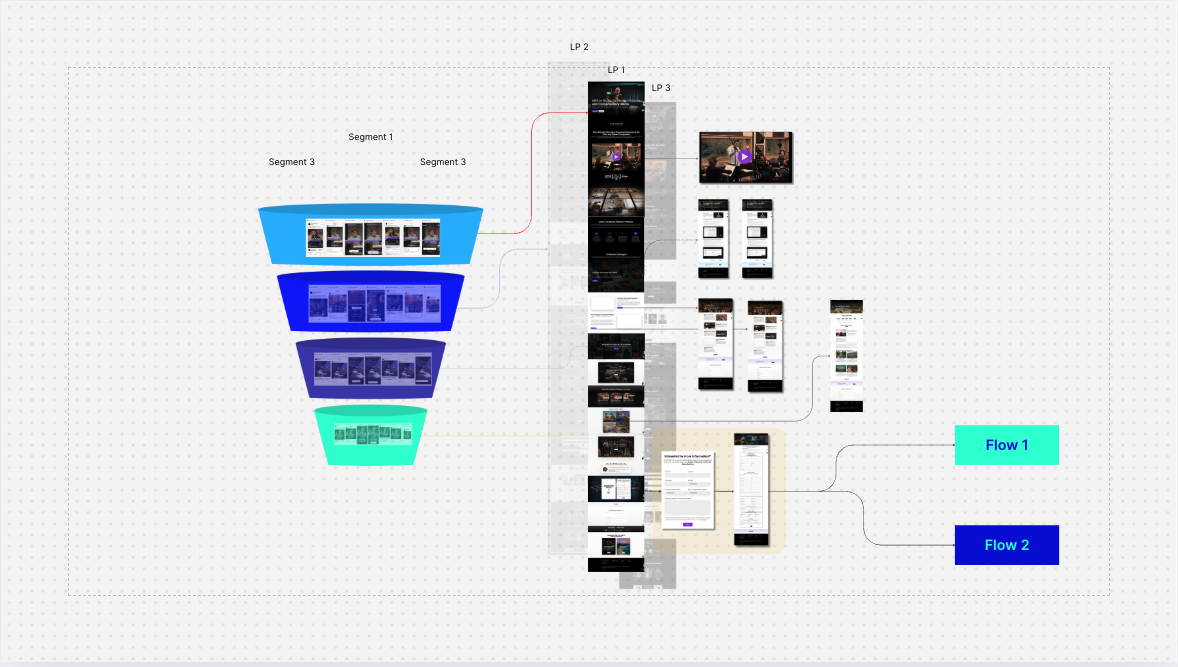
We built a story in a full-funnel with three stages:
- Top of Funnel (TOFU): Captivating videos showed a glimpse of the prospect’s future.
- Middle of Funnel (MOFU): We reinforced the narrative by highlighting what makes it a life-changing experience.
- Bottom of Funnel (BOFU): We guided high-intent prospects with a clear path to a fulfilling career.
This shift meant we weren’t just asking for a sale. We were telling a story, building a relationship, and guiding people through a process. It aligns with how people naturally discover and decide.
Using First-Party Data to Find the Right Students
Their old targeting was too broad — stacked interests, weak lookalikes, and little real precision. That’s not precision, that’s noise. And noise is the fastest way to waste money on paid social.
To fix it, we needed clarity, not from a fancy data science team, but from going back to basics: first-party data and real conversations with students and staff.
Here’s what we did:
- Learn from the team: We analysed past student data, but the real value came from speaking with admissions and programme directors who lived the process every day.
- Validate with students: By interviewing current and former students across the globe, we uncovered motivations, aspirations, and pain points that numbers alone can’t explain.
- Define the audience by programme: We discovered unique nuances between programmes — important details in how students perceived the value, which shaped why they enrolled.
- Map the conversion path: These human insights gave us visibility into the touchpoints that truly mattered, helping us design a smoother customer journey from first click to enrollment.
We stopped guessing and started building campaigns that resonated globally — the difference between noise and clarity.
Cutting Through the Noise with Messaging and Creatives
Messaging often misses the mark. In FSAE’s case, a headline like “Scholarships Available” may have been true, but:
It pulled in the wrong crowd — people chasing discounts rather than a world-class education. It quickly turned into a race to the bottom.
So we focused on four key fixes:
- Personalised ads: Using our audience insights, we built ads that spoke directly to each segment’s real goals and motivations.
- Relevant messaging: Instead of leading with discounts, we highlighted FSAE’s unique value — a premium, career-defining education. This attracted students serious about their future.
- Revamped creative assets: We developed visuals that felt relatable and trustworthy, strengthening brand credibility.
- Brand consistency: We introduced clear guidelines so every ad looked and felt like part of the same design system.
In a world of endless ads, posts and messages, attention is currency. Relevance and consistency turned FSAE’s message into one that truly stood out.
Making Every Click Count with MarTech Integration
I’ve seen this scene play many times:
Marketing is arguing that the pipeline is full, while sales is complaining that the leads don’t convert.
The real power isn’t in a set of tools or a single campaign. It’s in a cohesive system where every touchpoint—from the first click to the final close—is connected. For FSAE the key here was alignment, consistency, and having the channels working towards the same business goals.
With a brand-new paid social structure in place, we needed to tie it all together:
- Performance tracking: A proper technical setup replaced the standard pixel, unlocking robust reporting and advanced conversion optimisations.
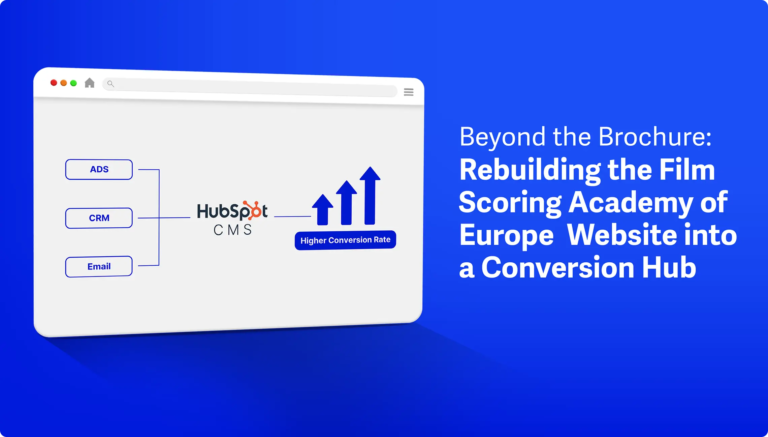
- A website that converts: The old site was just a static brochure. We redesigned it into a digital experience that reflected FSAE’s premium value and turned visitors into qualified leads.
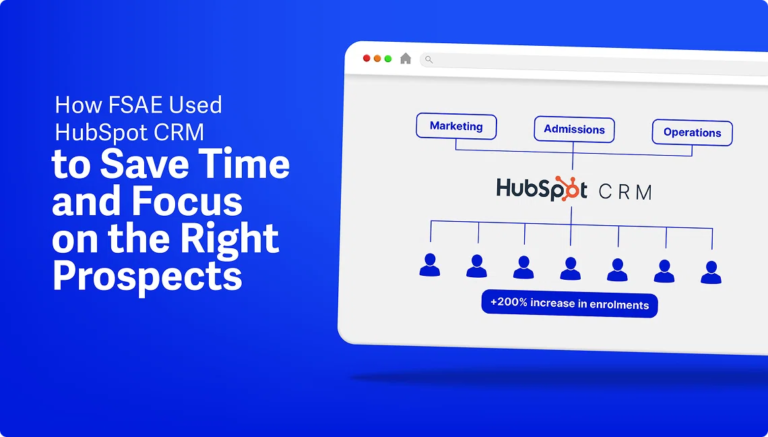
- A single source of truth: With data scattered, the student journey was invisible. Implementing HubSpot CRM created a unified view, finally connecting marketing performance to enrolments.
- Feeding Meta with revenue signals, by syncing the CRM with Meta, the algorithm learned who actually became students — cutting wasted spend, improving lead quality, and making every impression work towards revenue.
By connecting these pieces, we built one setup that transformed activity into a measurable student journey — and every click into potential enrollment.
The Outcome: From Costly Adverts to Revenue Stream
The shift in strategy proved to be a success. It turned paid social from an expensive channel into a predictable driver of results. The numbers tell the story:
- 20% decrease in ad spend year-on-year.
- 19.57% lead-to-enrolment conversion — a record for one of the programmes.
- €1M+ in annual sales generated.
- The flagship programme filled five months ahead of schedule.
This wasn’t about quick fixes or chasing discounts — it was about building a system. Paid social became part of a connected framework, driving business outcomes while freeing the admissions team to focus on genuine conversations with qualified students.
The lesson? Efficiency comes from integration. When ads, customer experience and MarTech work together, paid social stops being noisy and starts delivering financial results.
Your Roadmap for Winning with Paid Social
Ready to transform your paid social strategy into a high-performing system? Here’s a simple three-step plan you can put into action today, based on a system that actually works.
- Step 1: Define Your Audience with Data: Stop guessing who you’re talking to. Go back to basics and find the truth about your core segments. Use your existing customer insights, and talk to your admissions and programme directors, to build a clear picture of your ideal audience.
- Step 2: Build Your Full-Funnel Story: Don’t get stuck in a single gear and only run bottom-funnel ads. Create three stages — awareness, education, conversion — and match your message and creatives to each step.
- Step 3: Align and Integrate Your Channels: The real power isn’t in a single campaign or tool. It’s in a cohesive system where every touchpoint is connected. Make sure your website, marketing technology, and analytics are all working together to create a seamless customer experience, feed algorithms and provide a single source of truth for your data.
These three steps aren’t quick hacks — they only work as part of a broader system where technology and human insight reinforce each other. That’s why the real impact came when FSAE combined funnel design, MarTech integration, and human-led insights into one connected model.
This is just the start. In our comprehensive case study, we break down the complete playbook—from funnel mapping to CRM-driven ads—so you can apply the same system to your own business.