The Million-Dollar Question Every Marketer Faces
Let’s be honest about something we all secretly think: wouldn’t it be amazing if we could just flip a switch, let automation handle everything, and watch the revenue roll in while we focus on strategy?
Back when I was at Google, I watched brilliant Marketing Directors—sharp, data-driven leaders juggling impossible expectations—get caught in this exact trap. The pressure to deliver results while managing dozens of moving parts… They’d spend weeks perfecting manual campaigns, obsessing over keyword bids and audience segments, only to see competitors scale past them with what looked like “set it and forget it” automation.
Why Smart Marketers Build Layered Systems Instead
The accounts driving the strongest results weren’t running pure manual strategies or fully automated setups. They built integrated approaches that amplified each other. Manual campaigns provided targeted control where it mattered most. Automation delivered reach and discovery where human intervention would bottleneck progress. Think of it like this: manual campaigns are your scalpel, automation is your power drill. You wouldn’t use a power drill for brain surgery—or a scalpel to build a house.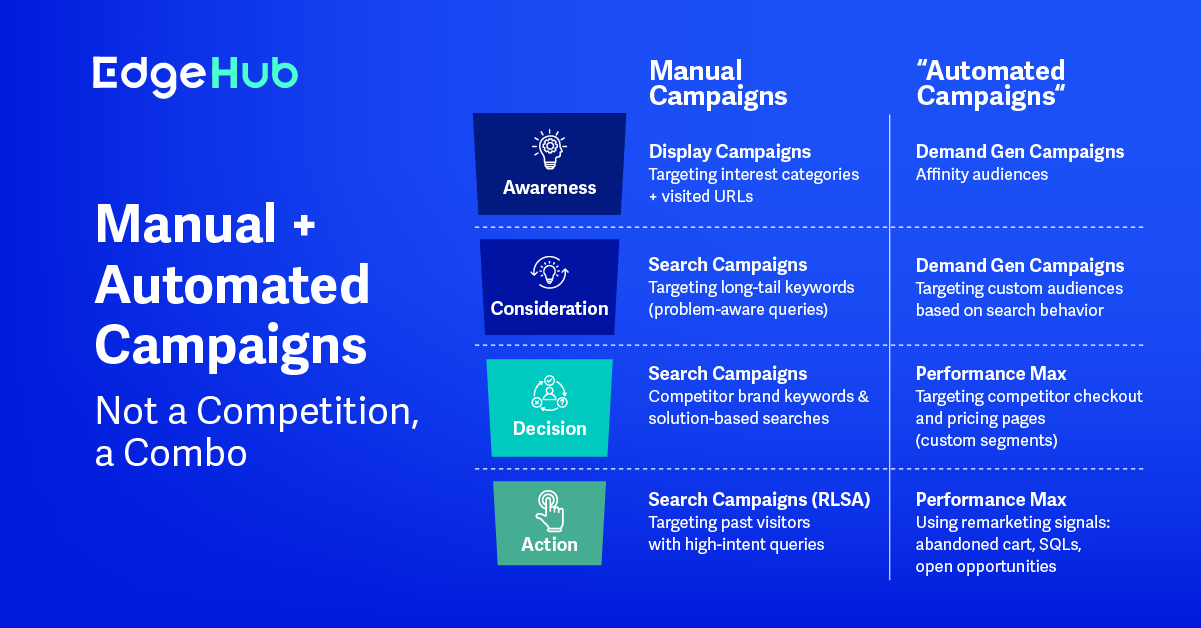
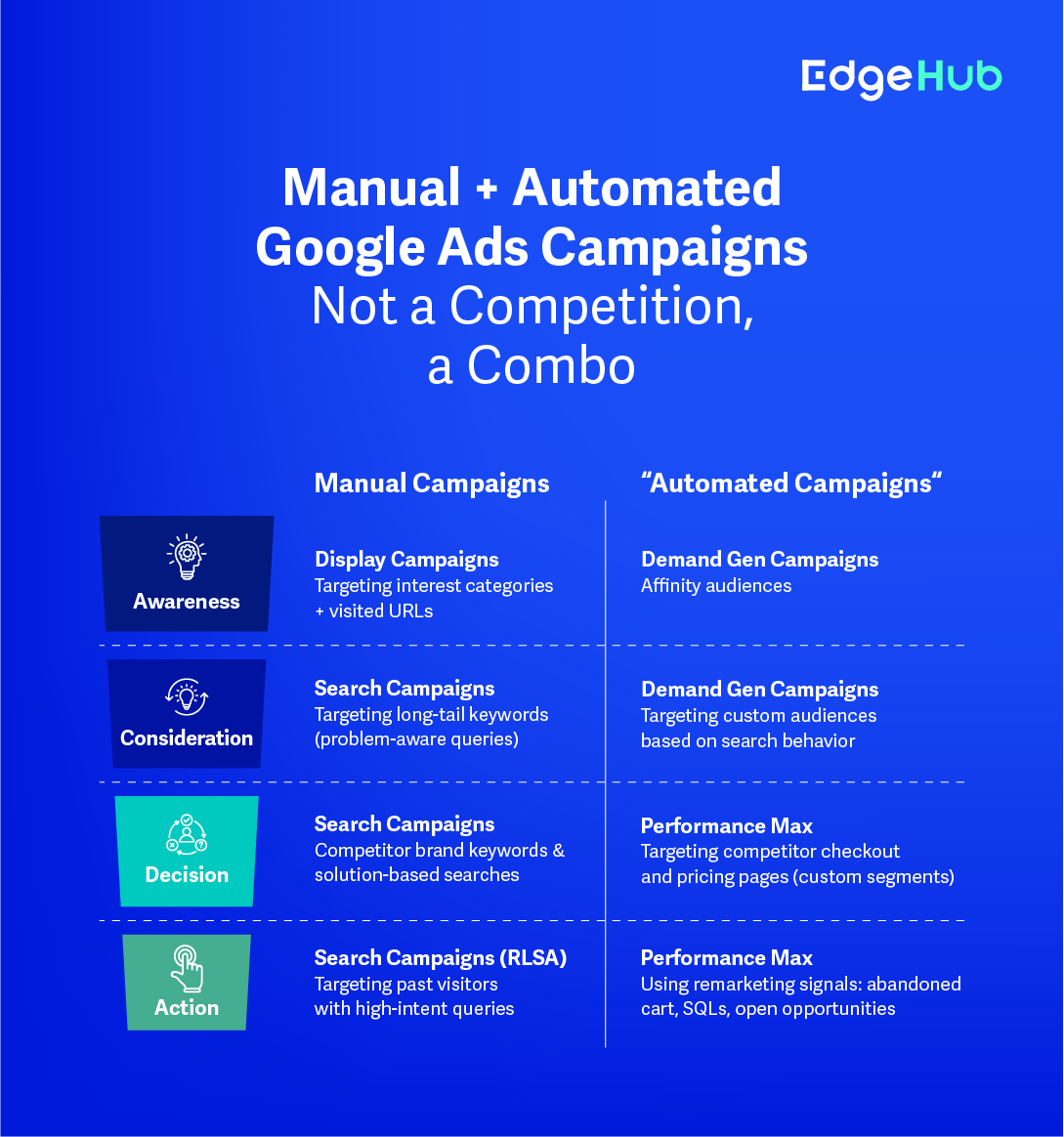
Manual Campaigns: Your Precision Instruments
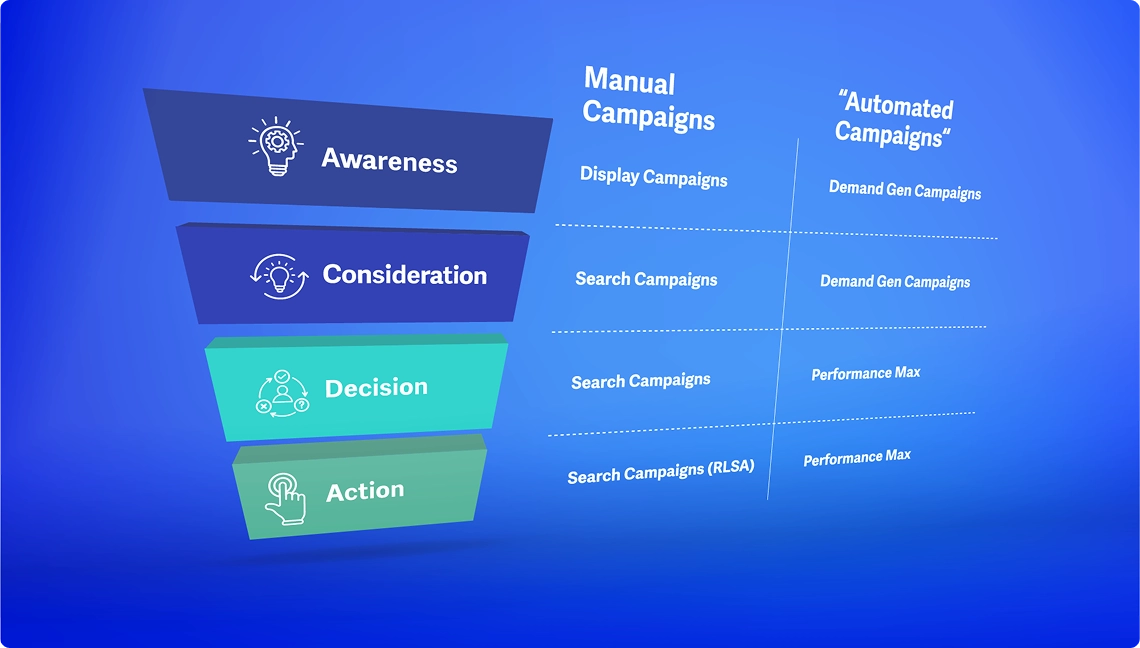
Manual setups—Search, YouTube, Display, RLSA—give you granular control where precision matters most:
• High-Intent Keyword Search Campaigns capture bottom-funnel queries with precision targeting.
• Tailored Display Campaigns put your ads on hand-picked, high-relevance sites your audience already trusts.
• Dynamic Remarketing re-engages users with the exact products or services they viewed.
• YouTube Consideration Campaigns build trust mid-funnel with testimonials and explainer content.
• Remarketing Lists for Search Ads (RLSA) let you bid aggressively on warm prospects.
Automated Campaigns: Your Expansion Engines
Automated tools like Performance Max and Demand Gen excel where scale and discovery matter:
• Performance Max accesses Google’s full inventory, uncovering profitable queries you never considered
• Smart Bidding adapts to real-time auction dynamics faster than any human

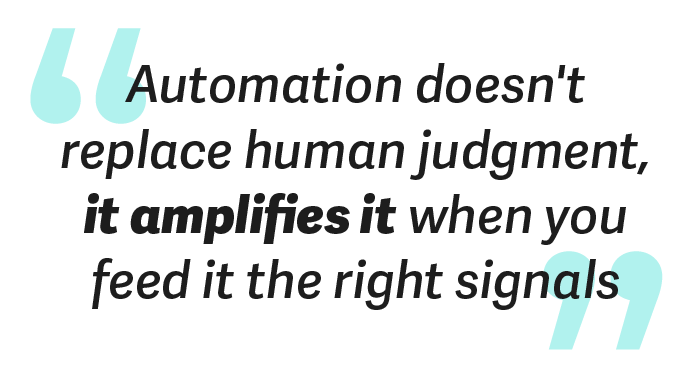
Why Funnel-Stage Mapping Multiplies Performance
The magic happens when you map campaign types to funnel stages and customer intent levels. Performance Max excels at top-and-mid-funnel discovery while manual Search campaigns dominate high-intent, bottom-funnel moments.
The highest-performing accounts had specific playbooks for when to go manual vs. automated at each stage—but those detailed mappings are what separate good performance from breakthrough results.
The Three Pillars of Hybrid Success
After analyzing what separated the top performers from everyone else, three core principles emerged consistently:
Layer Your Approaches Strategically
Don’t pick sides—combine them. Manual campaigns give you precision on high-value terms while automation discovers new opportunities and amplifies what works.
Match Messaging to Customer Mindset
Early-stage prospects need education and curiosity. Later-stage buyers want proof and urgency. Your creativity should shift as they move through their journey.
Allocate Spend Based on Performance
Move the budget to what’s actually driving results monthly. Focus on outcomes that matter to your business, not traditional channel thinking.
These three pillars form the foundation—but the specific implementation details that make them work? That’s where the real competitive advantage lies.
The Numbers Don’t Lie About Hybrid Strategies
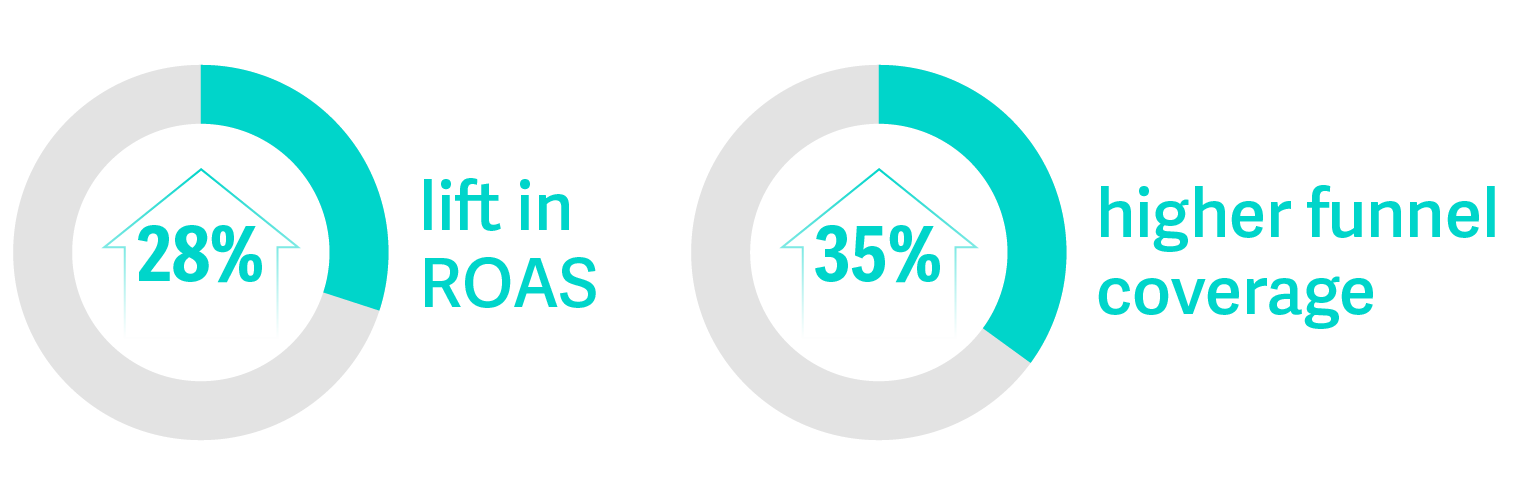
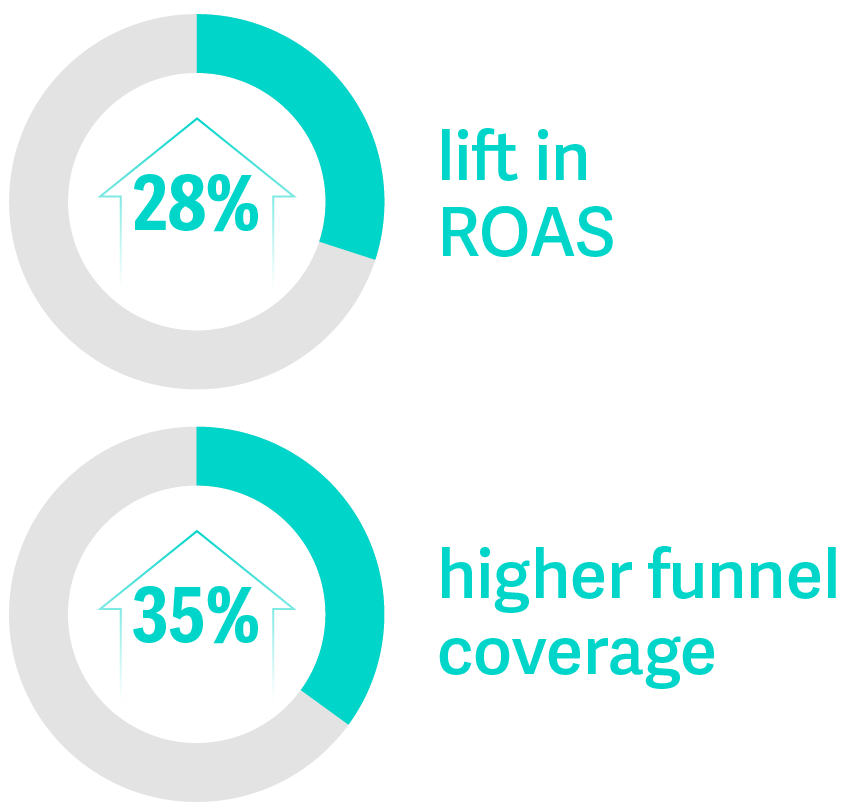
According to Google’s Performance Planning Research, advertisers using hybrid approaches across Search, Display, and Performance Max see:
• 28% higher ROAS compared to single-channel strategies • 35% better funnel coverage across all customer journey stages • Significantly reduced customer acquisition costs through improved targeting precision
The marketers implementing “hybrid strategies” now are positioning themselves ahead of competitors still stuck in the manual-vs-automated debate.
Ready to Stop Choosing Sides?
This is just the foundation of what’s possible when you start building integrated performance systems. The detailed campaign mapping frameworks, specific targeting strategies, and budget allocation approaches that drove results for top-performing accounts?
They’re all documented in our comprehensive guide, including the campaign combinations that deliver 28% higher ROAS, the funnel-stage strategies that work, and the real data behind why hybrid approaches outperform single-channel setups.
Download “7 Learnings from 7 Years at Google Implementing 7-Figure Growth Strategies” to discover the complete manual + automated framework, including the strategic playbooks and performance insights from analyzing thousands of high-spend accounts.
Need Help Building Your Hybrid Strategy?
At EdgeHub, we specialize in building these hybrid campaign architectures that blend manual precision with automated scale. We help businesses implement the exact framework strategies that top-performing accounts use—without losing the human insight that drives real conversions.
No expectations—just sharing how we can help you build campaigns that multiply your results instead of dividing your focus.
If you missed it, this post follows directly from Chapter 5: The Time Liberation Strategy: Why Smart Automation Beats Hard Work in 2025. That entry showed how marketing automation frees teams from repetitive tasks and creates the space for plan and creativity. Combined with today’s hybrid marketing approach, these lessons highlight why the smartest advertisers don’t see it as manual vs automated campaigns. They build systems that balance precision and scale, unlocking the performance edge that drives sustainable growth.