Why Good-Looking Reports Don’t Always Mean Good Results
You know that moment when your dashboard lights up green? CTRs rising, CPL dropping, leads flowing in. The room feels like a win.
But here’s the hard truth: unless those metrics connect to revenue, you’re celebrating activity, not growth.
During my years at Google, I dug into million-dollar accounts that looked flawless on paper — yet the pipeline was flat. The issue wasn’t effort or budget. It was what I call dashboard theater: tracking signals that look impressive, but fall far short of real business goals.
What I Discovered After Auditing Million-Dollar Accounts
Here’s what nobody talks about in marketing conferences: the accounts driving the strongest results weren’t the ones with the most sophisticated tools or the biggest budgets. They were the ones asking fundamentally different questions.
While most teams celebrated clicks and form fills, these winners obsessed over Customer Acquisition Cost, pipeline velocity, and actual closed deal value. They understood something fundamental: not every click is a conversion, and not every form fill turns into revenue.
The uncomfortable truth? More data often equals more confusion, unless you know exactly what to look for.
The Great Metrics Divorce: Activity vs. Outcomes
Here’s where most marketing teams lose the plot—they track what’s easy to measure, not what actually moves their business forward.
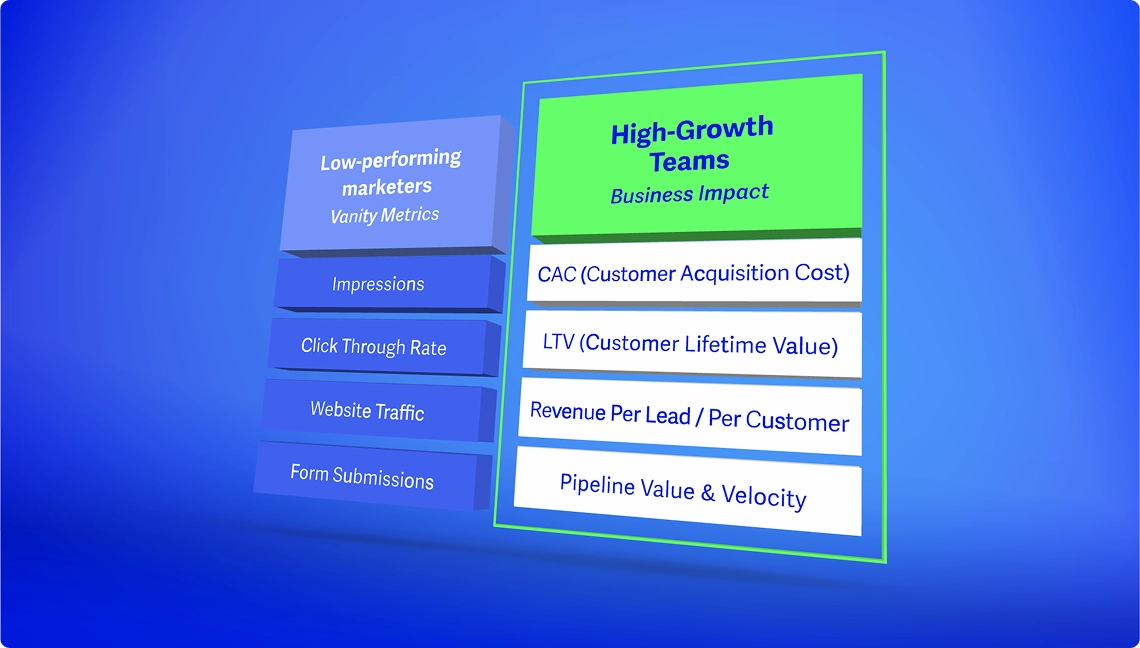
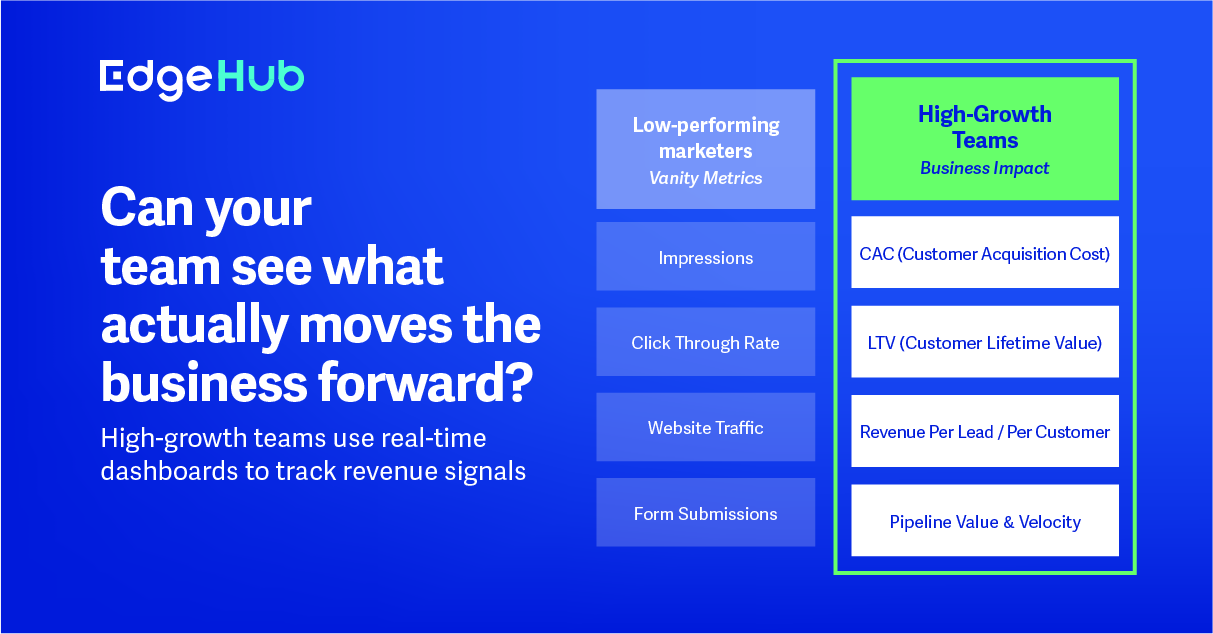
The Activity Addicts track:
- Impressions and clicks
- Form submissions and downloads
- Email opens and website visits
The Revenue Rebels focus on:
- Customer Acquisition Cost (CAC)
- Customer Lifetime Value (CLTV)
- Pipeline velocity and value
- Real closed deal value
The difference? One group runs a marketing activity center. The other operates a revenue generation machine.
Key Insight: If you don’t feed clear conversion signals, even the smartest teams and platforms will end up optimizing for noise instead of growth.
The Non-Negotiable Components
Google Analytics 4 (GA4) + Google Tag Manager (GTM)
Your Foundation Master event-based tracking to understand cross-device user paths and build custom funnels that reflect your unique customer journey.
Offline Conversions Integration – The Reality Check Connect your CRM data back to Google Ads to attribute leads that convert offline. This reveals which campaigns generate customers, not just suspects.
First-Party Data Strategy – Your Competitive Edge
With third-party cookies disappearing, building your own consented first-party data is the new gold standard for marketing measurement.
Dynamic Dashboards – The Command Center
Build real-time dashboards that showcase revenue outcomes, not just marketing activity. My personal favourite: Google Looker Studio.
Your Foundation Master event-based tracking to understand cross-device user paths and build custom funnels that reflect your unique customer journey.
Offline Conversions Integration – The Reality Check Connect your CRM data back to Google Ads to attribute leads that convert offline. This reveals which campaigns generate customers, not just suspects.
First-Party Data Strategy – Your Competitive Edge
With third-party cookies disappearing, building your own consented first-party data is the new gold standard for marketing measurement.
Dynamic Dashboards – The Command Center
Build real-time dashboards that showcase revenue outcomes, not just marketing activity. My personal favourite: Google Looker Studio.
Your Path from Data Chaos to Revenue Clarity
Ready to build measurement systems that actually guide growth? Here’s your roadmap:
- Define Success First, Then Build: Start with business objectives—closed deals, actual revenue—not campaign settings.
- Track What Converts: Measure demo bookings, qualified consultations, deal progression—not just form fills.
- Close the Revenue Loop: Send deal data back to Google Ads to train the algorithm on what really matters.
- Build Full-Funnel Dashboards: Connect marketing spend directly to closed deals.
- Automate Insights: Generate decision-ready summaries, not just reports.
This approach to measurement is part of the comprehensive strategy detailed in our white paper that transformed Google Ads accounts generating 7-figure growth.
The Truth About Modern Marketing Measurement
You don’t need more dashboards—you need the right data to drive real decisions. Here’s what the research reveals: data-driven organizations are 23X more likely to acquire customers and 6X more likely to retain them.

When you align marketing measurement with actual business outcomes, your campaigns stop optimizing for noise and start scaling what actually converts. Your team stops chasing vanity metrics and starts building systems that compound growth.
The principles behind building measurement systems that drive real business growth are covered in our comprehensive guide, along with the other strategic insights that transformed high-performing accounts.
Download “7 Learnings from 7 Years at Google Implementing 7-Figure Growth Strategies”
Get the complete strategic insights from 7 years of working with top-performing advertisers, including the measurement principles and real data that separated winners from everyone else.
Need help implementing these measurement insights?
At EdgeHub, we help businesses build measurement tools that turn scattered data into clear growth strategies—connecting every touchpoint to actual revenue outcomes.
Schedule Your Free Measurement Audit
If you missed it, this article links back to Chapter 3: How to Make Your Data Work For You in 2025. That section revealed how hybrid campaign systems balance precision and discovery for maximum impact. Combined with measurement strategies that tie spend to outcomes, these approaches show how connected systems drive efficiency while proving their direct influence on revenue growth.
Taken together, they belong to a 7 chapter series distilled from my 7 years at Google, each entry turning a core growth principle into a practical system for sustainable scale.
The principles behind building measurement systems that drive real business growth are covered in our comprehensive guide, along with the other strategic insights that transformed high-performing accounts.
Download “7 Learnings from 7 Years at Google Implementing 7-Figure Growth Strategies”
Get the complete strategic insights from 7 years of working with top-performing advertisers, including the measurement principles and real data that separated winners from everyone else.
Need help implementing these measurement insights?
At EdgeHub, we help businesses build measurement tools that turn scattered data into clear growth strategies—connecting every touchpoint to actual revenue outcomes.
Schedule Your Free Measurement Audit
If you missed it, this article links back to Chapter 3: How to Make Your Data Work For You in 2025. That section revealed how hybrid campaign systems balance precision and discovery for maximum impact. Combined with measurement strategies that tie spend to outcomes, these approaches show how connected systems drive efficiency while proving their direct influence on revenue growth.
Taken together, they belong to a 7 chapter series distilled from my 7 years at Google, each entry turning a core growth principle into a practical system for sustainable scale.