For many educational institutions, a website redesign is often treated as a branding exercise. The conversation revolves around aesthetics: a modern feel, impressive visuals, and brand alignment.
While a strong visual identity is important, this “digital-first” impression is only half the story. A website’s most critical, strategic function often gets overlooked: its role as a high-performance platform for capturing leads and driving enrolments.
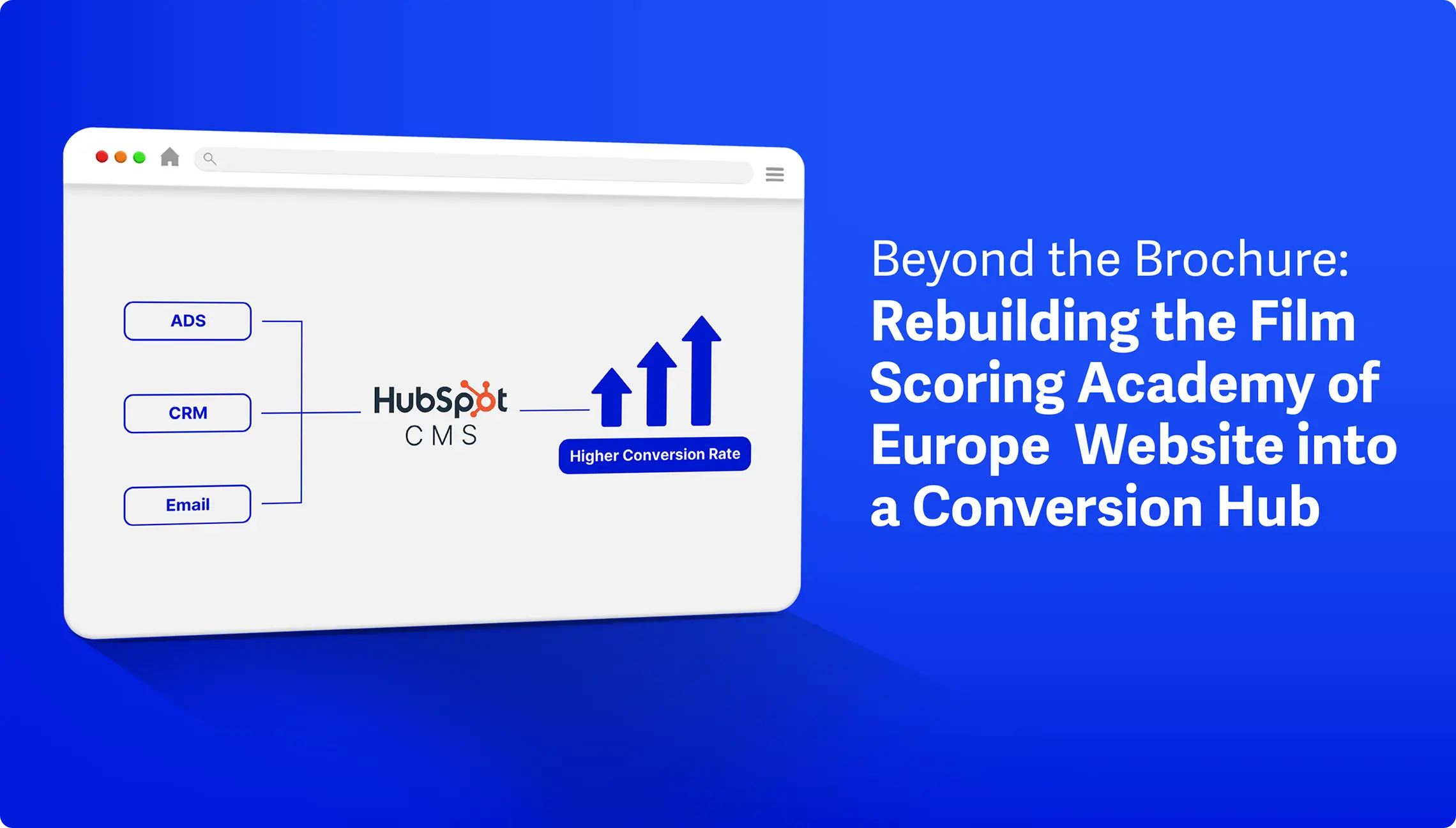
This strategic gap was the central liability of the Film Scoring Academy of Europe’s (FSAE) old website. It was a “digital brochure” that acted as a bottleneck, undermining brand credibility, lacking a clear conversion path for potential prospects.Together with Catmedia, EdgeHub rebuilt the site on HubSpot CMS as an intelligent conversion hub for FSAE’s entire MarTech ecosystem — enabling clean segmentation, full-funnel attribution, and automated lead prioritisation. The result: an insight-led platform supporting €1M+ in annual revenue and a 19 % lead-to-enrolment conversion rate.
Here’s the systems-led blueprint that made it happen.
Part 1: The Blueprint: From Research to a Conversion-First Design
To build a true “conversion hub” and fix the old site’s “leaky funnel,” we had to move beyond assumptions. The new architecture wasn’t based on guesswork; it was built on a deep, multi-faceted research phase to see the academy from the prospect’s perspective.
- Industry and Competitor Analysis: We looked at the tools composers use daily (DAWs, notation software, etc.) to understand their technical language and expectations. We also benchmarked competitors to identify strategic gaps and opportunities in visual design, information architecture, and user flow.
- User Research: Through a combination of one-on-one interviews and on-site observations—watching students in the studio, in class, and collaborating—we were able to map the actual conversion path they followed, not the one we assumed they followed.
- Faculty & Expert Interviews: We held in-depth meetings with lecturers and programme directors to understand the student profile from their expert perspective. This revealed what prospects truly seek — their goals, questions, and motivations — insights only the teaching team could provide.
- The Strategic Outcome: This research became our blueprint. It allowed us to design a new, holistic customer experience that was appealing, engaging, and informative. Most importantly, it allowed us to directly target the rational and emotional barriers we had identified.
Part 2: “Information-First” Design: Disarming Scepticism with Depth
Our user research showed that prospects for a high-value programme are not just browsing; they are investigating. They are anxious (“Am I good enough?”) and sceptical (“Is this legit?”). We therefore designed an
“Information-First” strategy,
using content depth across the entire site as a CRO tool. The goal is to let users disarm their own scepticism by providing transparent, thorough answers before they even have to ask.
This strategy is built on our conversion path mapping. We created “self-service information funnels” in key areas of the website.
An example of this “Information-First” strategy is our 3-Part Module Framework:
This strategy is built on our conversion path mapping. We created “self-service information funnels” in key areas of the website.
An example of this “Information-First” strategy is our 3-Part Module Framework:
- Overview (The “What”): the tangible structure (“3 credits”) builds professionalism.
- What you’ll learn (The “How”): practical detail (“DAW, MIDI mock-ups”) proves expertise.
- Why we teach this (The “Why”): the professor’s voice explains purpose and pedagogy.
The MarTech Connection: This “depth” strategy creates invaluable
behavioural data.
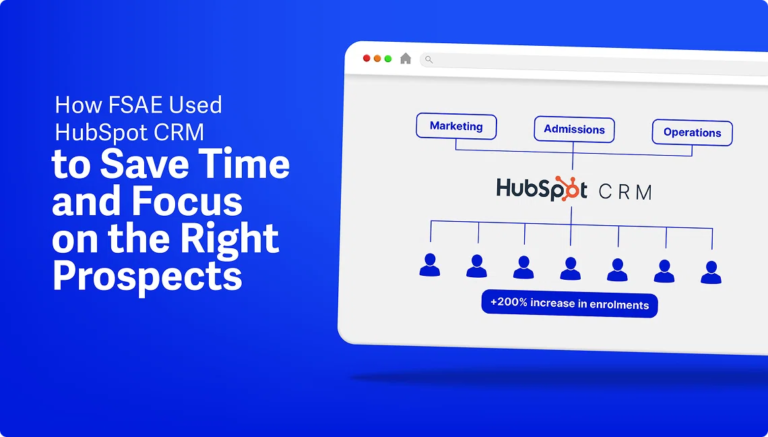
Every interaction fed into HubSpot, giving admissions visibility into each prospect’s interests. This
data-driven empathy
made follow-ups personal and relevant — a foundation for higher trust, stronger engagement, and scalable personalisation.
This pivot to a personalisation-first experience isn’t just good UX; it’s a core revenue strategy.
This pivot to a personalisation-first experience isn’t just good UX; it’s a core revenue strategy.
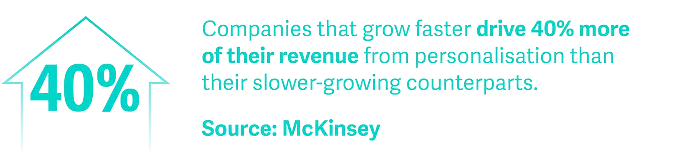
Our Information-First architecture is the mechanism that delivers this personalisation at scale.
Part 3: Programme Pages as the ‘Specialised Sales Team’
These high-conversion landing pages are the “specialised sales team” where our research, “Information-First” strategy, and “Trust Stack” all come together. They are the primary destination for segmented traffic and paid ads.
Persona-Specific Messaging: Each page sells a different outcome:
Persona-Specific Messaging: Each page sells a different outcome:
- MFA Page: A career transformation and immersion (“The Ultimate… Practical Experience”).
- Online Page: Flexibility and accessibility (“From anywhere in the world”).
- Summer Page: An Intense, life-changing experience (“a 21-day immersive journey”).
Engineering Credibility: The “Trust Stack”. To solve the old site’s “brand credibility” problem, we rebuilt these pages as an engine of trust, systematically overcoming a prospect’s scepticism:
- Emotional: a hero video showing students recording with a live orchestra — proof through experience. Show, don’t tell.
- Authoritative: faculty logos from Disney, Star Wars and more — authority by association.
- Social: verified testimonials with names, photos, and countries — authentic community validation.
- Logical: accreditation and peer positioning alongside Juilliard and Curtis — rational reassurance.
Together, these layers rebuilt confidence, turning curiosity into trust and trust into leads.
Part 4: The “Real” Experience: Visuals as a Conversion Tool
Beyond the technical architecture, our research showed prospects needed to feel the experience, not just read about it. The old site’s “brand credibility” problem was also a visual one.
- Strategic Branding: This wasn’t just an aesthetic choice; it was a strategy to build a cohesive, trustworthy UI. By aligning colour, typography, and image style, we established a premium, professional standard that matched the calibre of the institution and the industry.
- Immersive Video: We produced high-quality, “movie-like” narratives that allow the prospect to emotionally rehearse their future. These videos guide them through the entire journey—from the classroom with high-profile lecturers, to the podium conducting an 84-piece orchestra in a national studio.
- Authentic Photography: We implemented a strict “no stock photos” rule. Every image on the site is a real photo of real students, faculty, and studios.
Part 5: The Conversion Handoff: Connecting Forms, CRM and Ads
This is the technical connection that makes the whole system work.
Two clear CTAs — Request Info and Apply Now — guide every journey.
Behind them, a smart HubSpot form acts as both data-triage and lead-scoring tool:
Two clear CTAs — Request Info and Apply Now — guide every journey.
Behind them, a smart HubSpot form acts as both data-triage and lead-scoring tool:
- Programme interest = automatically segments the user.
- What best describes you? = Profile type prioritises composers and high-fit applicants.
- A user submits the form.
- A clean, segmented, and scored lead is created in HubSpot (Post 5).
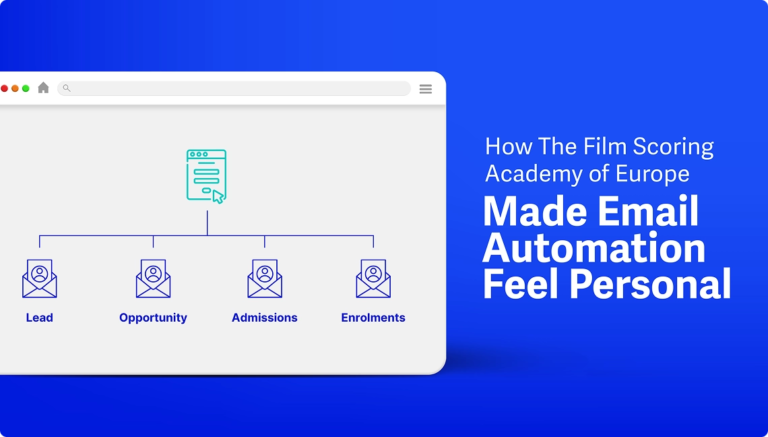
- The correct, “human-centred” email automation is triggered (Post 4).
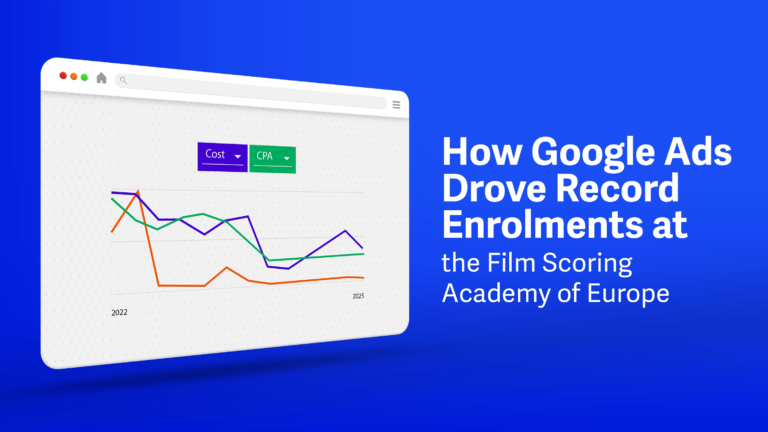
- This conversion event is fed back to Google/Meta (Posts 2 & 3), telling the ad algorithms, “This is what a real lead looks like. Go find more.”
Part 6: The Ultimate ROI: A Platform for Efficiency and Scale
The biggest gain wasn’t just better attribution — it was efficiency.
- From Manual Triage to Prioritised Action: The old site’s “fragmented data” led to a lengthy inbox of enquiries. The new hub, by pre-segmenting and pre-scoring every lead, delivers a prioritised pipeline directly into HubSpot. This allows the team to spend less time digging and more time conversing with the highest-intent prospects.
-
From a “Static Cost” to a “Scalable Asset”: The old site was a liability. The new hub is a platform for future growth. Because the data foundation is clean, the segmentation is built-in, and the MarTech is integrated, FSAE can now:
- Launch new programmes with new funnels, simply by replicating the “Program Page -> Module -> Form” structure.
- Target new markets with confidence, knowing the data will be captured cleanly.
- Scale ad spend, knowing the conversion data being fed back to the ad platforms is- accurate, making the entire growth model predictable and scalable.
The Indispensable Lynchpin
The FSAE website became the lynchpin of its entire growth ecosystem — the intelligent centre connecting brand, marketing, admissions, and data.
It validates every campaign claim, builds the trust needed to convert high-value prospects, and captures the clean, segmented data that fuels CRM automation and ad optimisation.
Far beyond a redesign, it’s now the system that turns traffic into insight and insight into predictable revenue. This transformation didn’t just fix a website — it built the digital foundation for FSAE’s next five years of scalable growth.
Ready to build a website that converts?
Discover the full FSAE playbook — from UX design to HubSpot integration — in our complete case study.