The Revenue Gap You Need to Close
Picture this: your marketing team just delivered 200 qualified leads this month. Your sales team converted only 5 of them. Marketing celebrates the volume. Sales questions the quality. Sound familiar?
It’s not a failure of effort — it’s a lack of alignment.
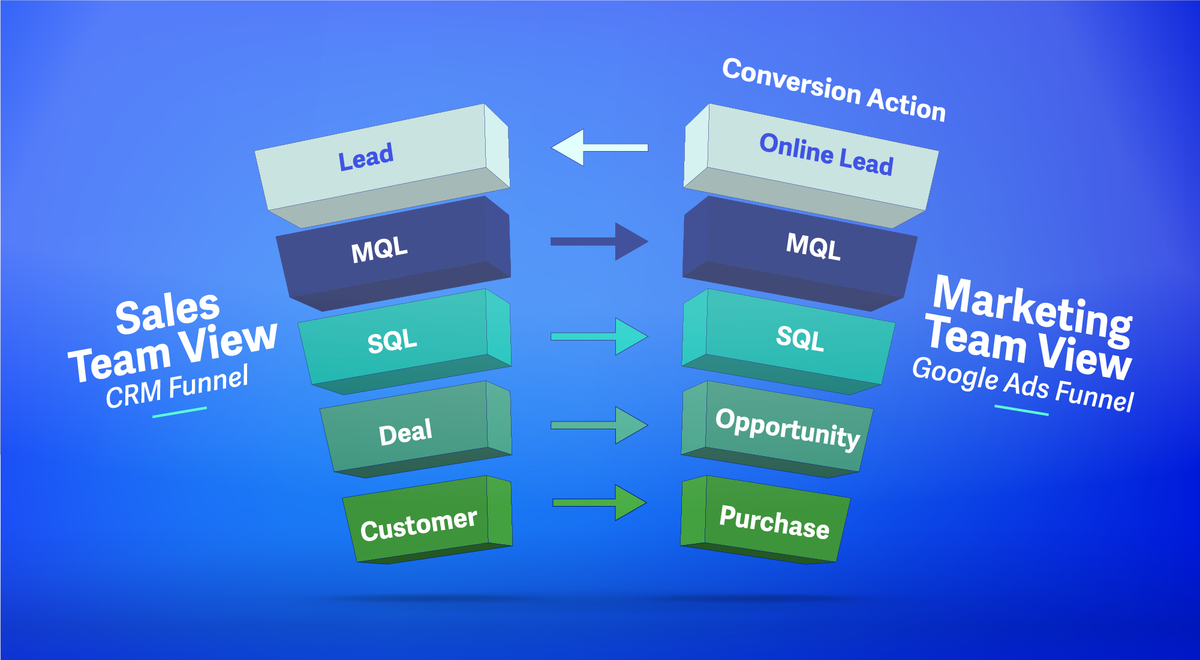
Back when I was at Google, I audited hundreds of accounts where this exact scenario played out monthly. Marketing optimized for MQLs, sales focused on SQLs, and Google Ads? It was learning from mixed signals that had nothing to do with actual revenue.
Here’s what I discovered: the highest-performing accounts didn’t have the best marketers or the best salespeople. They had the best teamwork.
What Team Misalignment Costs You
The damage isn’t always obvious, but it’s expensive:
- Marketing generates costly leads that sales never wanted— up to 80% get ignored
- Google Ads optimizes for the wrong signals— Expensive Form Submissions instead of customers
- Creative misses real customer objections—the gold sales hears daily goes unused
- Budgets get blamed instead of processes—”marketing doesn’t work” becomes the narrative
The hidden cost? These small inefficiencies compound monthly, quietly affecting budgets and team morale until something breaks.
The Language That Drives Revenue
Alignment isn’t about meetings or org charts. It’s about speaking the same language.
The top teams I worked with had one thing in common:
– Shared definitions
– Shared goals
– Shared success
They stopped asking “How many MQLs?” and started asking “How much revenue?”
And they went further: by integrating their CRM with Google Ads, they trained the algorithm to recognise what winning actually looked like — not just a form fill, but real deals, pipeline, and revenue growth.
What Top Teams Do Differently
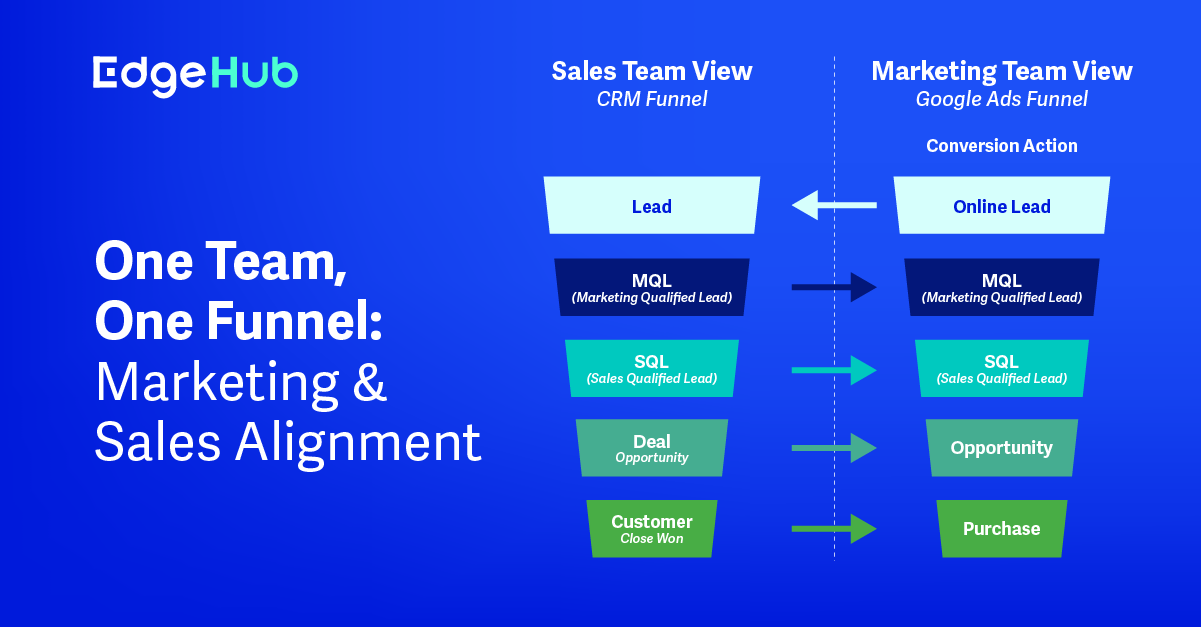
The highest-performing accounts I saw during seven years at Google weren’t just the ones with the best media plans. They were the ones where marketing and sales operated as one team, on one funnel, with one definition of success.
Here’s what I consistently saw among the winners:
- Connected Data: Closed-won deals fed back into Google Ads, guiding the algorithm with real outcomes.
- Sales Insights in Creative: Objections and customer language from the sales floor shaped the ads.
- Trusted Dashboards: One shared view of spend → pipeline → revenue.
The result? Campaigns that didn’t just generate activity, but predictable growth.
The Numbers Behind Marketing and Sales Alignment
When marketing and sales operate as one team, the results speak for themselves:
Accounts integrating CRM sales outcomes into Google Ads see:
- 22% higher qualified lead rate
- 27% improvement in pipeline efficiency
This isn’t theory—it’s what happens when every investment has clear direction and every lead follows a defined path to success.
How to Build Alignment in 2025
If you’re looking to unify your revenue engine, start here:
- Define Success Together → Agree on what a good lead looks like, from budget to intent.
- Connect Your Systems → Sync CRM outcomes into Google Ads to fuel smarter bidding.
- Share the Same Dashboards → Track what matters: pipeline velocity, CAC, LTV, revenue per lead.
From Fragmented Efforts to Unified Growth
Marketing and sales aren’t separate lanes — they’re parts of the same growth machine. The best-performing teams don’t just align once a year in workshops; they align daily in goals, systems, and data.
Your customers don’t care which team owns the funnel stage they’re in. They care about a consistent, valuable journey from first click to closed deal. Give them that, and growth follows.
Want the detailed frameworks, CRM templates, and shared KPI blueprints?
They’re all inside my white paper: “7 Learnings from 7 Years at Google Implementing 7-Figure Growth Strategies.”
Need help implementing team alignment? At EdgeHub, we specialize in building integrated systems that connect your marketing platforms with your sales processes. We help companies transform isolated teams into unified revenue operations.
Schedule Your Free Alignment Consultation
If you missed it, this Chapter builds on the foundation we covered in Chapter 1: Why Full-Funnel Marketing Still Wins in 2025. This post is part of a 7-part series unpacking the biggest lessons from my 7 years at Google, each one focused on a core building block for growth.